
Case Study: Improving Efficiency with a Low Headroom Hoist in a Small Workshop
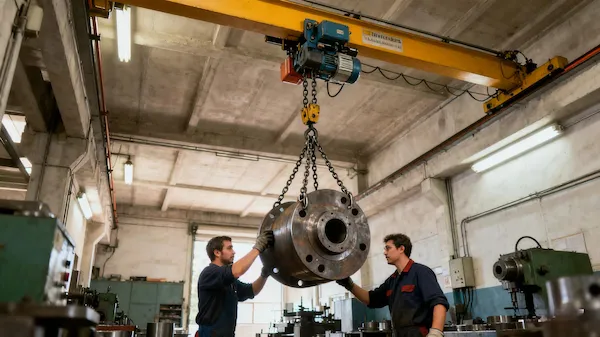
When operating a modern industrial machining facility or specialized fabrication plant, every centimeter of vertical headroom directly influences your production capacity. This real-world B2B case study examines how a small metal fabrication workshop overcame severe ceiling height restrictions by replacing unsafe manual handling with a high-performance low headroom electric chain hoist.
Prior to retrofitting, standard overhead cranes could not provide sufficient hook stroke distance. By upgrading to purpose-built compact lifting equipment, the workshop unlocked dramatic operational improvements, halved manual labor dependencies, and established a safer working environment compliant with rigorous safety standards.
The Operational Challenge – Limited Headroom & Structural Bottlenecks
The facility specializes in precision machining and structural assembly of heavy steel components, regularly lifting raw steel blocks, jigs, and finished assemblies weighing between 500 kg and 2 tons. However, the plant’s architecture posed major material handling obstacles:
- Restricted Ceiling Height: The total clearance from the concrete floor to the bottom flange of the monorail beam was only 3.5 meters. Standard fixed type electric chain hoists consumed over 80–100 cm of headroom, leaving insufficient height to lift tall workpieces over CNC machine beds.
- Inefficient Manual & Forklift Interventions: Operators were forced to rely on floor hydraulic jacks, manual gantry aids, and forklifts to position parts—a process that was extremely slow, arduous, and imprecise.
- Escalating Production Downtime: Idle machine time increased by 25% while CNC operators waited for available forklift drivers or additional crew members to assist in manual alignment.
- Heightened Occupational Safety Hazards: Awkward rigging angles, off-center loading, and manual strain increased the potential for dangerous load slippage and operator fatigue. (For more details on avoiding operational risks, consult our detailed technical guide on common lifting mistakes and safety precautions).
The Engineering Solution – Retrofitting a KYLIFT Low Headroom Chain Hoist
After evaluating several overhead material handling options, the plant management collaborated with KYLIFT (operated by Hebei Shoupai Hoisting Machinery Manufacturing Co., Ltd.) to implement a tailored 2-ton low headroom electric chain hoist system.
Key Technical Specs & Design Advantages:
- Ultra-Compact Headroom Frame: Unlike traditional hoist configurations where the motor hangs directly below the trolley, the low headroom design positions the chain hoist motor parallel to the trolley monorail. This design reduces the hook-to-beam distance by up to 45%, gaining crucial lifting height.
- Precision Dual-Speed Lifting & Traversing: Powered by an industrial-grade copper wire motor and electromagnetic double-brake system, enabling micro-speed positioning when aligning heavy steel plates onto CNC fixtures.
- Heavy-Duty G80 Alloy Load Chain: Equipped with manganese steel alloy chain and drop-forged safety hooks designed to handle continuous duty cycles. (Ensure long-term durability by following standard hoist chain lubrication maintenance routines).
- Built-in Fail-Safe Protection: Features mechanical load limiters, upper/lower limit switches, and an IP54/IP55 rated pendant control for operator protection.
The Results – Quantifiable Efficiency Gains & Cost Savings
Within 90 days of installing the KYLIFT low headroom chain hoist, the fabrication plant conducted an internal performance audit comparing metrics against historical benchmarks:
- Accelerated Workflow Productivity: Average load loading and unloading times dropped from 25 minutes down to 8 minutes per machine cycle. For broader insights on optimizing workflow across larger facilities, read our warehouse material handling solutions guide.
- Substantial Labor Optimization: Heavy component positioning that previously required four workers can now be managed smoothly by a single operator using the ergonomically suspended pushbutton pendant.
- Zero In-Plant Safety Incidents: Eliminating makeshift floor rigging completely resolved load tipping hazards. Furthermore, regular hoist hook safety inspection checks ensured 100% compliance during quarterly safety audits.
Key Engineering Lessons for Workshop Managers
This case study offers actionable insights for plant managers and procurement officers facing similar structural constraints:
- Calculate Effective Headroom Before Purchasing: Measure the exact distance between your crane beam bottom flange and the top of your highest machine tool. Do not buy standard hoists if clearance is under 4 meters.
- Match Rated Capacity to Peak Load Duty: Choosing a 2-ton hoist provided a comfortable safety margin for 1.5-ton loads, extending gearbox life and avoiding motor overheating.
- Enforce Rigorous Quality & QC Inspections: Source equipment from verified manufacturers with strict factory testing protocols. Learn more about how factory testing protects your investments in our report on behind-the-scenes hoist quality control processes.
Frequently Asked Questions (FAQ)
What is a low headroom hoist, and how does it save ceiling space?
A low headroom hoist is specially engineered with a side-mounted or integrated trolley frame that repositions the hoist body beside or parallel to the I-beam rather than underneath it. This significantly reduces the headroom distance (distance from the beam flange to the bottom hook), maximizing usable lifting height in tight workshops.
How do I choose between a 1-ton and 2-ton low headroom electric chain hoist?
Selection depends on your maximum working load limit (WLL) and duty cycle. For general tooling and light steel fabrication, 1-ton is sufficient. However, if your daily heavy workpieces reach up to 1.5 tons, choosing a 2-ton rated hoist ensures safe overhead headroom, longer motor service life, and compliance with ISO/CE safety margins.
Can low headroom chain hoists be installed on existing monorail beams?
Yes, KYLIFT low headroom chain hoists feature adjustable motorized or manual trolleys designed to fit standard H-beams and I-beams. Our engineering team provides flange width customization to ensure seamless retrofitting into existing workshop structures.
Conclusion – A Strategic Investment for High-Efficiency Workshops
Solving vertical space constraints is not about compromising on lifting capacity. As demonstrated in this case study, upgrading to a low headroom electric chain hoist enables small and medium workshops to maximize usable ceiling space, improve operational throughput, and maintain uncompromising safety standards.
Whether you operate a workshop maintenance facility, a compact assembly line, or a specialized shipyard engine room, KYLIFT offers direct factory support and custom-engineered lifting equipment tailored to your exact dimensions.
Facing Low Ceiling Constraints in Your Plant?
Contact KYLIFT technical engineers today to request custom dimensional drawings, CAD layouts, and factory-direct B2B quotes for low headroom chain hoists.
Get a Factory-Direct Quote