
ARticle
Low Headroom Chain Hoist Price Guide: What Affects the Cost?
When workshops, warehouses, or construction sites face limited headroom, a low headroom chain hoist often becomes the ideal lifting solution. Compact and efficient, it allows heavy loads to be handled safely even in tight spaces.
But one of the most common questions buyers ask is: “How much does a low headroom chain hoist cost?”
This guide explains the key factors that affect pricing so you can make a confident purchasing decision—balancing budget, performance, and long-term reliability.
Why Price Varies for Low Headroom Chain Hoists
Unlike off-the-shelf tools, a hoist is an industrial investment. Its cost is influenced by multiple factors:
- Capacity – Lifting range from 0.5 ton to 20 ton dramatically changes cost.
- Lifting height – Standard 3–6m is more affordable, while 20m+ requires extra engineering.
- Manual vs. Electric – Manual options are cheaper, while electric hoists cost more but offer efficiency.
- Brand reputation – Trusted manufacturers with international certifications may charge higher, but reliability reduces downtime.
- Safety features – Overload protection, limit switches, and advanced brakes add value.
- Customization – A low headroom electric chain hoist designed for specific clearance challenges may come at a premium.
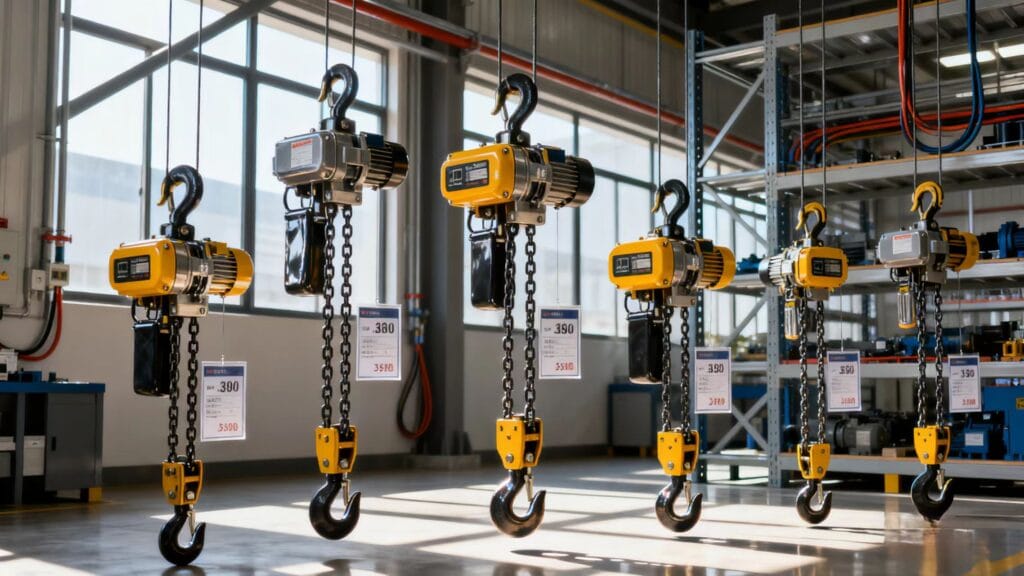
Price Range Overview
While exact numbers depend on supplier and region, general pricing trends are:
- Manual low headroom chain hoist: Affordable entry-level, suitable for lighter loads.
- Electric low headroom chain hoist: Mid to high price, offering efficiency and reduced labor costs.
- Specialized heavy-duty hoists: Premium range, tailored for construction or logistics projects.
If you’re not sure which capacity fits your workshop, our buying guide for low headroom hoist capacity explains how to calculate the right lifting requirements.
Total Cost of Ownership Matters
The purchase price is only one part of the equation. Smart buyers also consider:
- Installation costs – Mounting, wiring, and safety testing.
- Maintenance schedule – Regular lubrication and inspections.
- Spare parts availability – Genuine parts reduce downtime.
- Energy efficiency – Electric models with efficient motors lower long-term operating costs.
- Safety compliance – Cheaper products may lack certifications, risking penalties or accidents.
In other words, a slightly higher upfront cost may save far more in the long run.
How to Get the Best Value
- Define your lifting needs clearly – Avoid overbuying capacity.
- Compare multiple suppliers – Look beyond price, check certifications.
- Consider after-sales support – Reliable service can reduce downtime.
- Think long-term – A durable hoist protects both your workers and your budget.
For industries like warehousing, our article on how hoists reduce labor costs shows why efficiency matters as much as price.
Conclusion – Price is Only One Factor
A low headroom chain hoist is more than just a purchase—it’s an investment in efficiency, safety, and productivity.
By understanding what affects the cost, you can balance budget with reliability and choose a solution that supports your workshop or warehouse for years to come.