
article
Low Headroom Hoist Safety Guide: What Every Workshop Should Know
When it comes to maximizing limited space in workshops or warehouses, the low headroom hoist is an invaluable lifting solution. Compact, efficient, and designed for tight clearances, these hoists allow businesses to handle heavy loads where standard equipment cannot fit.
But while their advantages are clear, safety must always come first. A hoist is only as reliable as the way it is installed, operated, and maintained. This safety guide walks you through essential practices that every workshop should adopt to prevent accidents, minimize downtime, and extend the life of their low headroom hoist.
Why Safety Matters with Low Headroom Hoists
A low headroom hoist reduces the distance between the beam and the hook, which makes it perfect for tight workspaces. However, this design also means operators must pay extra attention to:
- Load limits – Avoid exceeding rated capacity.
- Clearances – Prevent collisions with ceilings or beams.
- Work conditions – Ensure stable flooring and safe lifting zones.
For a detailed explanation of working principles, you can also read our guide on what a low headroom chain hoist is.
Pre-Operation Checklist
Before using a low headroom chain hoist, operators should complete a simple inspection routine:
- Check for wear and tear on the chain, hook, and trolley wheels.
- Test the brakes to confirm they engage smoothly.
- Inspect the power supply (for electric hoists) and ensure controls respond correctly.
- Verify load rating plates are visible and legible.
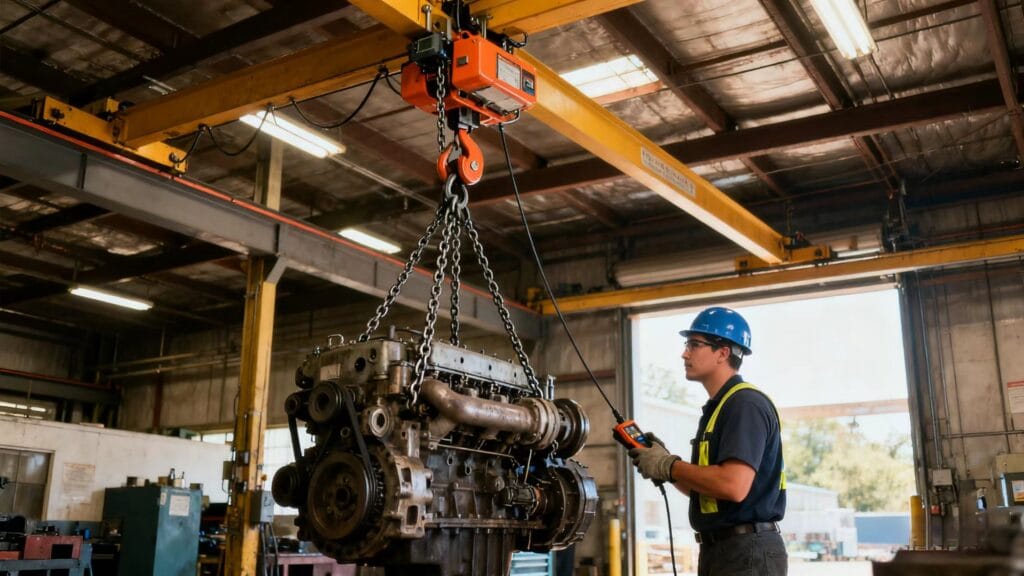
Safe Lifting Practices
- Never exceed rated capacity. Even occasional overloads can permanently damage the hoist.
- Lift vertically only. Side pulls or angular lifts put dangerous stress on components.
- Avoid people standing below loads. Create a clear lifting zone.
- Use slow and steady movement. Jerky starts or stops can cause accidents.
For workshops with low ceilings, a low headroom electric chain hoist can provide smoother, safer operation compared to manual alternatives. (See our comparison guide on electric vs. manual hoists).
Maintenance and Inspection Schedule
A consistent maintenance routine keeps your hoist both safe and efficient.
- Daily: Visual inspection of chains, hooks, and brakes.
- Monthly: Lubricate moving parts, check limit switches.
- Quarterly: Full professional service inspection, including load testing.
Workshops that integrate such schedules not only reduce risks but also cut down on costly downtime.
Training and Operator Awareness
Even the best equipment cannot compensate for poorly trained operators. Workshops should:
- Provide regular training sessions.
- Emphasize proper load handling.
- Teach workers how to recognize early signs of equipment failure.
Encouraging a safety-first culture ensures that every lift is performed with confidence and precision.
Conclusion – Safety is Your Best Investment
Choosing the right hoist is important, but using it safely is non-negotiable. By following inspection routines, practicing safe lifting, and ensuring proper training, your workshop can unlock the full benefits of a low headroom hoist while protecting workers and equipment.
If you are considering upgrading or need expert advice on choosing the right lifting capacity, check out our buying guide for low headroom chain hoists.