
Mini Electric Hoist Overview: Types, Features, Applications & Buying Guide
In modern workshops, automotive repair shops, and light industrial facilities, overhead lifting equipment is essential for maintaining operational efficiency and workplace safety. Among various overhead lifting solutions, the mini electric hoist stands out as a versatile, motor-powered lifting device engineered specifically for light to medium-duty material handling tasks. Whether you need to lift automotive engines, hoist maintenance materials, or streamline small-scale factory assembly lines, choosing the right small electric hoist can dramatically reduce labor strain and boost workflow speed.
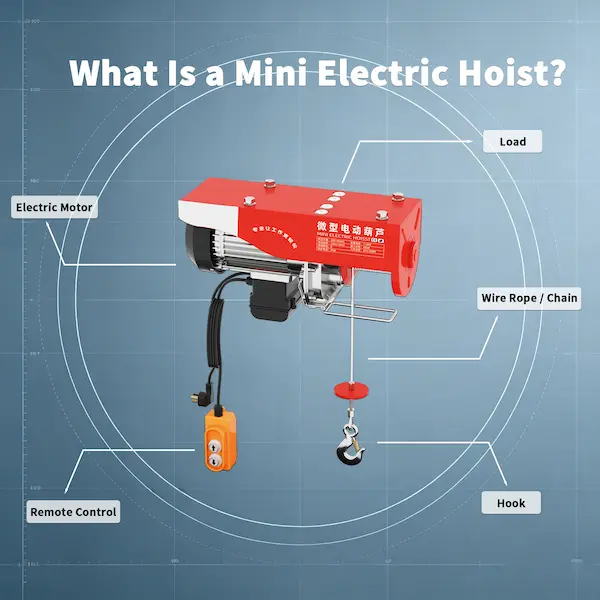
1. What Is a Mini Electric Hoist?
A mini electric hoist is a compact electric lifting device powered by a electric motor, designed to replace manual pulling mechanisms in spaces with limited headroom or lighter load requirements. Built with high-tensile steel wire ropes, durable hook assemblies, and internal braking systems, mini hoists deliver smooth, precise vertical lifting for capacities ranging from 100 kg up to 1200 kg.
Key Advantages Over Manual Hoists
- Significantly Faster Operation: Motorized lifting speeds save considerable time compared to hand chain blocks during repetitive lifting cycles.
- Reduced Operator Fatigue: Eliminates physical exertion, allowing operators to position loads effortlessly via push-button pendant controls or wireless remotes.
- Enhanced Safety & Control: Equipped with emergency stop switches and upper/lower limit switches to prevent mechanical over-travel.
2. Two Main Types of Mini Electric Hoists
Understanding the design differences between standard B2B workhorses and ultra-portable hoists is crucial for selecting the ideal model for your facility.
The standard industrial workhorse for light production lines, automotive repair, and commercial maintenance.
- Lifting Capacity: 200kg to 1200kg (Single hook / Double hook modes).
- Core Features: 100% pure copper motor, heavy-duty gear housing, double braking system, high-tensile wire rope.
- Primary Applications: Machine shops, industrial maintenance, small warehouse storage, automotive repair garages.
Explore our full specification lineup on the Fixed Type Mini Electric Hoist product page.
An ultra-portable, lightweight lifting solution engineered for flexible relocation and quick setup.
- Lifting Capacity: 160kg to 500kg.
- Core Features: Lightweight aluminum alloy housing, portable carry handle, rapid plug-and-play installation, high lifting speed.
- Primary Applications: Residential garages, DIY home projects, temporary construction scaffolding, light maintenance tasks.
3. PA Series Mini Electric Hoist Features
The PA series is widely favored across commercial workshops for its structural robustness and configuration flexibility:
- Powerful Motor: Built with 100% pure copper wire motor coils that provide superior heat dissipation, continuous duty cycles, and prolonged operational life.
- Multiple Capacity Options (Single vs. Double Line): Easily configured in single-hook mode (higher lifting speed) or double-hook mode (doubled load capacity up to a mini hoist 500kg or electric hoist 1000kg rating).
- Remote Control Operation: Comes standard with an IP54 pendant control switch featuring an emergency stop button, or optional long-range wireless remote control for operator safe-distance monitoring.
- Wire Rope Lifting System: Features high-tensile, anti-rotation steel wire rope that ensures smooth winding on the drum without tangling or excessive wear.
For horizontal travel along I-beams, PA hoists can be integrated with a monorail beam trolley. Check out the Running Type Mini Electric Hoist with Trolley for complete motorized travel setups.
4. Compact Mini Hoist Features
When mobility and space efficiency take priority, compact mini hoists (often called “Little King Kong” hoists) excel:
- Lightweight & Portable Electric Hoist: Compact alloy housing allows a single operator to transport and position the hoist without auxiliary crane support.
- Easy Setup & Fast Hanging: Top hook suspension enables effortless mounting onto overhead pipes, scaffolding, or fixed mounting brackets.
- Space-Saving Footprint: Minimal headroom clearance makes it ideal for tight attic spaces, low-ceiling basements, or small workshop corners.
- Affordable & Cost-Effective: Delivers high productivity at an accessible price point for small businesses and independent contractors.
5. Mini Electric Hoist Applications
Mini electric hoists serve as essential material handling equipment across various commercial and residential settings:

Garage Engine Lifting
Safely pull engine blocks and transmissions. Read our step-by-step Garage Engine Lifting Safety Guide.

Workshop Material Handling
Position heavy steel parts onto CNC machines and welding jigs without manual straining.

Small Factory Assembly
Streamline workstation lifting cycles in electronics, pumps, and light mechanical assembly lines.

Home DIY & Maintenance
Move heavy lawnmowers, timber, and building supplies to upper floor storage or home garages.
6. Mini Electric Hoist vs. Manual Hoist
Comparing electric wire rope mini hoists with traditional manual chain blocks helps buyers select the best fit based on frequency, budget, and power availability:
| Comparison Factor | Mini Electric Hoist | Manual Chain Hoist |
|---|---|---|
| Operation Mechanism | Electric Motor (220V / 110V Single Phase) | Manual Hand Chain Pulling |
| Lifting Speed | Fast (5–10 m/min) | Slow (Dependent on physical pulling) |
| Physical Effort / Labor | Zero (Button controlled) | Moderate to High manual labor |
| Best Suited For | High-frequency lifting in workshops & garages | Occasional use, outdoor/remote sites without power |
| Portability & Setup | Requires power source connection | 100% independent, operates anywhere |
7. How to Choose the Right Mini Electric Hoist?
To ensure optimal performance and long-term reliability, evaluate these five critical technical factors before ordering:
- Load Capacity Requirements: Always select a hoist capacity that comfortably exceeds your heaviest load.
- 200 kg: Light tools, small lawn equipment, and HVAC parts.
- 500 kg: Car engines, gearboxes, and shop equipment (electric hoist for garage setups).
- 1000 kg+: Industrial machinery components, heavy steel raw materials, and factory jigs.
- Lifting Height & Single/Double Hook Setup: Remember that utilizing double-hook mode doubles the load capacity but halves the effective lifting height and speed. Ensure wire rope length matches your vertical travel needs.
- Usage Frequency & Work Duty: For continuous, high-frequency factory assembly, consider industrial-grade Electric Chain Hoists designed for heavy-duty cycle operations.
- Working Environment: Check for indoor vs. outdoor weather protection (IP54 rating) and explosive/dusty atmospheric considerations.
- Power Supply Compatibility: Mini electric hoists typically operate on standard single-phase residential/commercial power (110V/220V 50/60Hz), making them easy to plug into standard electrical sockets.
8. Safety Tips for Mini Electric Hoist
Preventing workplace accidents starts with consistent pre-operational checks and strict adherence to rated load limits. Never attempt diagonal pulling or overloading during daily operation. Review our detailed safety guide on Common Lifting Mistakes & How to Avoid Them for comprehensive operator training.
- Pre-Use Inspection: Verify hook safety latches engage correctly and inspect steel wire rope for fraying, kinking, or flat spots.
- Vertical Alignment: Always ensure the hoist drum is centered directly over the load’s center of gravity to avoid side pulling hazards.
- Clear Lifting Zone: Maintain a strict clear zone under suspended loads; never allow personnel to walk or stand beneath lifted items.
9. Maintenance Tips
Proper routine maintenance maximizes equipment service life and prevents unexpected operational downtime:
- Inspect Wire Rope Regularly: Clean away grit and apply appropriate wire rope lubricant to reduce internal friction. Refer to our maintenance resource: How Often Should You Lubricate a Hoist?.
- Check Motor & Gearbox: Monitor for unusual operational vibration or motor overheating during extended duty cycles.
- Keep Clean & Dry: Store portable electric hoists in clean, dry indoor locations when not in use to prevent atmospheric corrosion.
10. Frequently Asked Questions (FAQ)
Q1: What is a mini electric hoist used for?
A mini electric hoist is used for lifting light to medium-duty loads (100 kg to 1200 kg) vertically in automotive repair garages, small manufacturing workshops, maintenance bays, warehouse staging areas, and home DIY renovation projects.
Q2: How much weight can a mini electric hoist lift?
Standard PA series mini hoists typically handle 200 kg to 1200 kg depending on whether they are configured in single-hook or double-hook mode. Compact portable mini hoists (“Little King Kong”) usually cover 160 kg to 500 kg.
Q3: Can I use a mini electric hoist in my garage?
Yes. Mini electric hoists operate on single-phase 110V/220V household power, making them the ideal electric hoist for garage applications such as engine pulling, lawnmower servicing, and ceiling-mounted storage lifting.
Q4: What is the difference between a PA series hoist and a compact mini hoist?
PA series hoists offer higher weight capacities (up to 1200 kg), fixed structural mounting, or beam trolley integration. Compact mini hoists are designed for ultra-portability, fast hook-suspension hanging, and lighter load capacities (up to 500 kg).
Looking for Reliable Mini Electric Hoists for Your Business?
KYLIFT is a premier manufacturer supplying factory-direct PA series and portable mini electric hoists worldwide. Get CE-certified lifting equipment with OEM/ODM options today!
Request Factory Direct Wholesale Quote