
8 Common Lifting Mistakes & How to Avoid Them: A Complete Safety Guide
Published by KYLIFT Safety & Engineering Team | Workplace Overhead Crane & Hoist Safety Solutions
Section 1: Why Hoist Lifting Safety Matters
In modern industrial facilities, warehouses, and construction sites, overhead lifting equipment is essential for moving heavy machinery and materials. However, improper operation of manual or electric chain hoists can turn essential tools into serious hazards.
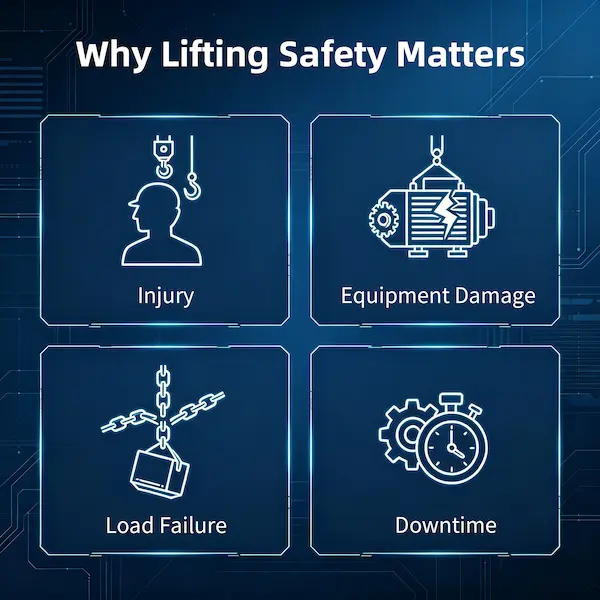
Understanding and preventing everyday operational errors is critical. Neglecting basic protocols often leads to severe consequences, including:
- Equipment Damage: Severe structural wear on hooks, gears, electric motors, and load chains.
- Catastrophic Load Dropping: Sudden mechanical or brake failure risking structural destruction below.
- Worker Injury or Fatality: Severe workplace hazards impacting crane operators and rigging crews.
- Production Downtime: Unscheduled maintenance shutdowns disrupting global supply chains.
To help you maintain high site compliance, our engineering experts at KYLIFT have identified the 8 most common hoist lifting mistakes and detailed actionable ways to avoid them.
Section 2: Mistake 1 — Overloading the Hoist
Overloading remains the single most dangerous mistake made on job sites. Operating lifting gear beyond its rated Working Load Limit (WLL) places excessive mechanical stress on every load-bearing component.
- Permanent mechanical stretching and deformation of the G80 alloy load chain.
- Disastrous electromagnetic or mechanical brake failure leading to slippage.
- Hook throat deformation and structural latch distortion.
Section 3: Mistake 2 — Side Pulling Instead of Vertical Lifting
Hoists, manual chain blocks, and monorail trolleys are strictly designed for pure vertical lifting. Attempting to drag or pull loads sideways across the shop floor introduces destructive angular loads.
Side pulling forces the load chain against the outer housing flange and chain guide, accelerating wear, jamming the sprocket, and potentially damaging the trolley frame. Always center the hoist hook directly over the load’s center of gravity before lifting off the ground.
Section 4: Mistake 3 — Ignoring Pre-Operational Inspection
Skipping daily visual inspections before a work shift is a frequent shortcut that compromised site safety. Equipment defects often develop incrementally long before a major component snaps.
Operators must adhere to a standardized inspection protocol before pulling the chain or pressing the pendant control button. For step-by-step guidance, refer to our comprehensive guide on hand chain hoist daily inspection checklists.
Key daily check points include:
- Chain Wear & Stretch: Excessive elongation, nicked links, or lack of proper lubrication.
- Hook Throat Opening: Measuring hook throat stretch and verifying functional safety latches.
- Structural Integrity: Cracks, visible deformation, and severe rust or chemical corrosion.
Section 5: Mistake 4 — Operating Damaged or Defective Equipment
When a minor flaw is detected, continuing work “just to finish one quick job” is a massive safety hazard. Damaged components under tension fail rapidly and without warning.
Immediately lock out and tag out (LOTO) any hoist exhibiting:
- Bent or stretched top/bottom hooks.
- Gouged, twisted, or corroded load chain links.
- Frayed cables or cracked pendant control switches on mini electric hoists.
- Unusual grinding noises, chatter, or slipping brakes during operation.
Section 6: Mistake 5 — Poor Load Balance & Off-Center Rigging
An unbalanced load is highly prone to tipping, shifting, or spinning wildly once lifted clear of the ground. Off-center rigging causes uneven force distribution across multi-leg slings, overloading single chain legs beyond design thresholds.
Section 7: Mistake 6 — Choosing the Wrong Chain Length or Lift Height
Selecting incorrect lift height specifications negatively impacts both workflow ergonomics and site safety:
- Chain Too Short: Forces operators into awkward angles, encouraging side pulling or over-stretching control cords.
- Chain Excessively Long: Unused chain slack lying on the shop floor collects abrasive dirt, creates trip hazards, and risks tangling under tension.
Measure your hook path and headroom clearances carefully. When workspace ceiling height is severely restricted, consider installing a specialized low headroom electric chain hoist to maximize effective hook travel.
Section 8: Mistake 7 — Ignoring Harsh Working Environments
Standard indoor lifting gear should not be exposed to harsh outdoor or corrosive industrial environments without proper protective modifications. Operating unsuited machinery leads to rapid electrical shorts or mechanical binding.
- High Humidity / Outdoor Sites: Requires IP55+ weather protection, stainless/galvanized chains, and protective canvas covers.
- Corrosive & Chemical Plants: Demands anti-corrosive epoxy coatings and stainless steel hardware common in shipyard lifting solutions.
- Dusty & Mining Areas: Requires sealed gearboxes and explosion-proof enclosures featured in mining lifting equipment.
Section 9: Mistake 8 — Skipping Scheduled Preventive Maintenance
Even the highest quality hoist requires continuous care. Relying solely on reactive maintenance when an item breaks shortens equipment service life and inflates total cost of ownership.
A rigorous preventive maintenance plan must cover:
- Lubrication: Keeping load chains lubricated with proper industrial chain oil to prevent friction and galling.
- Brake Testing: Regularly checking air gap clearances and friction disc wear.
- Cleaning & Testing: Removing dirt buildup and carrying out annual load testing in accordance with international safety standards. Read more about how KYLIFT tests every hoist during quality control.
📋 Industrial Safe Lifting Checklist
Bookmark or print this checklist for your shop floor operators: