
Hand Chain Hoist Daily Inspection Checklist: The Ultimate B2B Safety Guide
In heavy industrial environments like construction sites, machine workshops, and shipyards, safety is non-negotiable[cite: 10, 17]. Hand chain hoists are highly valued for their portability and reliable performance without electricity[cite: 13, 21]. However, regular wear and tear can compromise their mechanical integrity, creating serious occupational hazards. Implementing a strict hand chain hoist daily inspection checklist ensures operational efficiency, equipment longevity, and team safety[cite: 12].
As a trusted global lifting equipment manufacturer [cite: 5], KYLIFT controls every production phase from component machining to final load testing[cite: 11]. Below is our expert-recommended pre-operational inspection protocol for manual chain blocks[cite: 12].
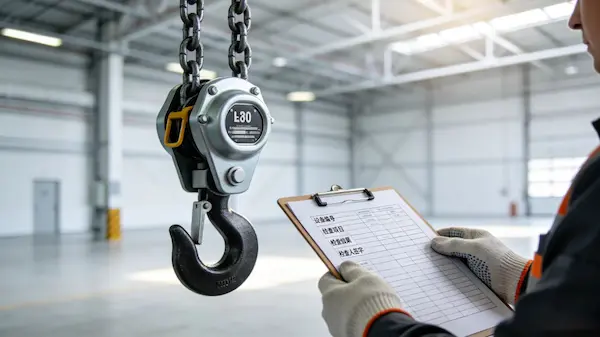
Why Pre-Operational Hand Chain Hoist Inspections Matter
Unlike powered lifting options like the fixed electric chain hoist or heavy-duty KCD electric winches, manual chain blocks rely purely on mechanical leverage and manual force[cite: 13, 15, 16]. Because they are often deployed in harsh environments—such as vertical or sloped construction sectors—they are prone to atmospheric corrosion, debris contamination, and overload strain[cite: 21]. Identifying structural anomalies prior to lifting prevents unexpected drops and protects both operators and valuable assets[cite: 20].
The Step-by-Step Daily Inspection Checklist
Operators must perform a visual and functional evaluation of the manual hoist before every shift. Follow these critical assessment areas:
1. Hook Inspection (Top and Bottom Hooks)
- Check for any visible bending, twisting, or throat openings. If a hook is stretched beyond its manufacturer specifications, remove it from service immediately.
- Ensure the safety latches are present, undamaged, and snap securely back into place.
- Inspect for cracks, deep gouges, or severe corrosion.
2. Load Chain & Hand Chain Examination
- Examine the high-tensile G80 load chain for nicks, gouges, heat damage, or weld spatters[cite: 12, 14].
- Verify there are no twisted links; a twisted chain can cause the mechanism to jam violently inside the load sheave.
- Ensure adequate lubrication along the entire moving assembly.
3. Hoist Body and Braking Mechanism
- Inspect the outer casing for dents or fractures that could pinch internal gears.
- Test the braking action by lifting a load slightly off the ground. The brake must hold the load securely without slipping when the hand chain is released.
4. Hardware and Accessories Compatibility
- If the hoist is paired with a GCT plain & geared trolley for horizontal I-beam movement [cite: 1, 34], check the trolley wheel clearance, beam width adjustments, and side plate conditions[cite: 34].
Quick Reference: Daily Inspection Criteria Table
| Component | What to Look For | Action Required if Defective |
|---|---|---|
| Hooks | Deformation, missing latches, cracks | Immediate Tag-Out & Replacement |
| G80 Load Chain | Wear, elongation, rust, twists [cite: 12, 14] | Do Not Operate; Replace Chain [cite: 12] |
| Braking System | Slippage, unusual grinding noise | Maintenance Overhaul Required |
| Trolley Assembly | Loose bolts, improper beam width [cite: 34] | Adjust and tighten before loading [cite: 34] |
Looking for Reliable Manual Blocks and Components?
At KYLIFT, we specialize in high-durability HSZ manual chain hoists designed to survive rigorous conditions in factories, warehouses, and marine settings[cite: 10, 34]. We offer full custom OEM/ODM specifications and factory-direct pricing for project procurement leaders worldwide[cite: 6, 7, 9].
Frequently Asked Questions (FAQ)
Q1: How often should manual chain hoists undergo detailed inspections?
A: Visual safety checks must happen daily before use. Detailed, documented periodic inspections should occur every 1 to 12 months, depending on the severity of operation and local regulatory laws.
Q2: Can I use an electric chain hoist checklist for a manual block?
A: While certain load chain and hook principles overlap, an electric chain hoist requires electrical control, limit switch, and motorized trolley inspections [cite: 1, 15] which are completely absent in manual chain blocks[cite: 13]. Always use a dedicated manual hoist checklist.