
How Often Should You Lubricate a Hoist? (Complete Maintenance Guide)
1. Why Lubrication Matters for Hoists
In heavy industrial material handling, proper machinery maintenance directly impacts workplace productivity and operational safety. A hoist—whether a manual chain block or a high-capacity electric hoist—operates under intense tension and friction. Regular lubrication is the single most effective maintenance task to preserve equipment performance.
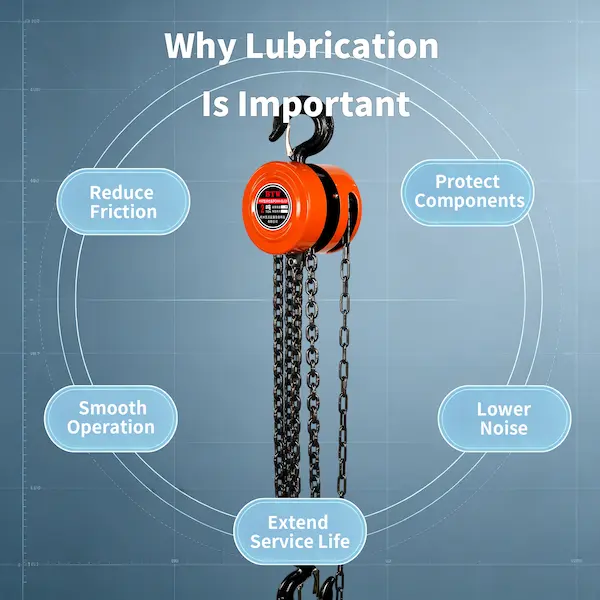
Routine lubrication provides several critical operational benefits:
- Reduces Friction: Smooths contact points between moving metal surfaces, minimizing horsepower loss and operator fatigue.
- Prevents Metal Wear: Eliminates direct metal-to-metal contact on load chains, sheaves, and gears.
- Improves Lifting Performance: Guarantees smooth, jitter-free vertical lifting and positioning accuracy.
- Extends Service Life: Significantly decreases mechanical degradation, protecting your capital investment.
- Reduces Unexpected Downtime: Avoids emergency line stoppages caused by jammed chains, seized bearings, or gear wear.
Neglecting lubrication is one of the most frequent maintenance oversights on job sites, often leading to severe common lifting mistakes and costly operational hazards.
2. Which Parts Need Lubrication?
Not all hoist components require the same type or frequency of lubrication. Understanding your equipment’s internal and external moving parts ensures balanced maintenance without contaminating friction-sensitive areas such as braking systems.
Load Chain
The load chain is the most critically exposed component of any hoist. As the chain passes over the load sheave, the inner link contact points experience extreme localized pressure. Without proper lubrication, chain links wear down rapidly, elongate, rust, and cause stiff movement or jumping.
Gears / Gearbox
In both manual chain blocks and electric chain hoists, precision spur or planetary gearboxes transfer motor or hand power into torque. Lubricating gears reduces internal friction, absorbs impact loads, and disperses heat accumulated during continuous duty cycles.
Hook Swivels & Moving Parts
Top and bottom hooks feature thrust bearings that allow full 360° rotation under load. Proper lubrication ensures smooth rotation, preventing the load chain from twisting or binding during alignment.
Internal Bearings & Bushings
Drive shaft bearings and sheave bushings require clean grease to reduce thermal buildup, quiet operational noise, and prevent shaft seizure.
3. How Often Should You Lubricate a Hoist?
There is no single “one-size-fits-all” calendar interval for lubricating hoists. Optimal lubrication frequency depends heavily on operational duty cycles, ambient temperature, load capacities, and environmental exposure.
Use the maintenance matrix below to establish a baseline lubrication schedule for your facility:
| Working Condition | Operational Profile | Recommended Lubrication Frequency |
|---|---|---|
| Light Use | Occasional lifting (a few times per week), indoor warehouse storage, low humidity. | Every 3 to 6 months |
| Daily Operation | Regular daily lifting cycles in general manufacturing or workshop maintenance environments. | Monthly inspection & application |
| Heavy-Duty Operation | Continuous shifting, full-rated load lifting, high-speed automated production lines. | Weekly to Bi-weekly maintenance |
| Dusty / Outdoor / Harsh | Exposure to sand, abrasive dust, rain, saltwater mist (shipyard lifting), or extreme heat. | Inspect daily; lubricate weekly (or clean and reapply as needed) |
Note: Always consult your manufacturer’s specific manual or daily inspection routines, such as our hand chain hoist daily inspection checklist.
4. Signs Your Hoist Needs Lubrication
Operators should remain vigilant for early warning signs indicating lubricant starvation. If you observe any of the following 5 symptoms, service the unit immediately:
- Unusual Noise: Grinding, squeaking, or high-pitched metallic friction sounds during hoisting.
- Chain Movement Becomes Difficult: The chain binds, jerks, or does not seat smoothly into the load pocket wheel.
- Rust or Discoloration Appears: Visible surface oxidation or reddish dust (fretting corrosion) on link contact points.
- Slow Operation: The hoist works harder than normal, drawing excessive current (electric hoists) or demanding high pull effort (manual hoists).
- Increased Vibration: Excessive chatter or shudder felt through the pendant hand control or hand chain.
5. How to Lubricate a Chain Hoist Step by Step
Follow this standardized 5-step maintenance routine to ensure safe and effective lubricant application on your equipment:
Before applying new lubricant, conduct a quick visual check. Verify that the load chain, hook latches, and housing are free from cracks, excessive wear, or structural deformation.
Never apply fresh oil over dirty, abrasive buildup. Use a stiff brush and a mild degreaser to thoroughly remove dust, grit, sand, and oxidized old grease from the chain links.
Apply industrial-grade chain lubricant directly into the interlink contact areas where friction is highest. Apply coat sparingly—avoid over-lubrication that can drip onto work surfaces or attract particulate debris.
Run the hoist through several complete lifting and lowering cycles under zero or light load. This helps coat the entire length of the chain and distributes lubricant evenly inside the load sheave and gear mechanisms.
Wipe off any excess oil from the outer link surfaces using a clean cloth. Ensure no lubricant has contaminated mechanical friction brake discs or ratchets.
6. Choosing the Right Lubricant
Using improper oil or grease can compromise internal components or render safety mechanisms useless. Never select lubricants based solely on price or convenience.
Key selection factors include:
- Temperature Limits: High-temperature facilities (foundries/steel mills) require specialized synthetic heat-resistant grease, while outdoor arctic conditions require low-pour-point oils.
- Environmental Conditions: Outdoor, marine, or chemical environments benefit from water-resistant, anti-corrosive lubricants with tackifier additives.
- Load & Viscosity Requirements: High-tonnage units like heavy duty wire rope hoists or G80 calibrated load chains require Extreme Pressure (EP) ISO VG grade oils formulated to resist heavy shock loads.
7. Common Lubrication Mistakes to Avoid
Avoid these 5 common mistakes to protect equipment integrity and workplace safety:
Assuming factory oil lasts forever. Dry chains wear up to 15 times faster than properly lubricated chains.
Applying sticky automotive grease on load chains (which attracts dirt) or spray penetrants like WD-40 (which evaporates quickly and provides zero film strength under load).
Excessive oil drips onto workers, creates floor slip hazards, and attracts airborne contaminants that act as abrasive grinding paste.
Trapping dirt, sand, and metal shavings beneath new grease accelerates internal abrasion.
Allowing oil or grease to leak onto dry-friction brake discs or ratchet pawls, causing dangerous brake slippage and uncontrolled load drops.
8. Sample Hoist Maintenance Schedule
Incorporate this practical preventive schedule into your facility management program:
- Daily (Pre-Shift): Visual check for chain dry spots, surface rust, or unusual mechanical noise.
- Weekly: Inspect load chain wear points; reapply chain lubricant in dusty or high-duty environments.
- Monthly: Complete lubrication review of chain, hook swivel bearings, and external moving parts. Wipe away excess dirt build-up.
- Periodic (6–12 Months): Full professional tear-down inspection by certified technicians. Check gearbox grease levels and internal brake wear.
9. How Proper Maintenance Extends Hoist Life
A systematic preventive maintenance and lubrication program yields substantial financial and operational returns:
Consistent Lubrication → Reduced Mechanical Wear → Fewer Equipment Failures → Extended Hoist Service Life
By spending a few minutes on routine cleaning and lubrication, factory operators protect capital investments, maintain compliance with international safety standards, and ensure long-term operational peace of mind.
10. Frequently Asked Questions (FAQ)
Need Expert Advice on Industrial Lifting Equipment?
KYLIFT supplies high-durability manual chain blocks, electric chain hoists, and factory-direct material handling solutions built to international standards.
Contact KYLIFT Technical Support