
Agriculture Lifting: Hoists and Winches for Agricultural Applications
Practical Lifting Solutions for Agricultural Applications
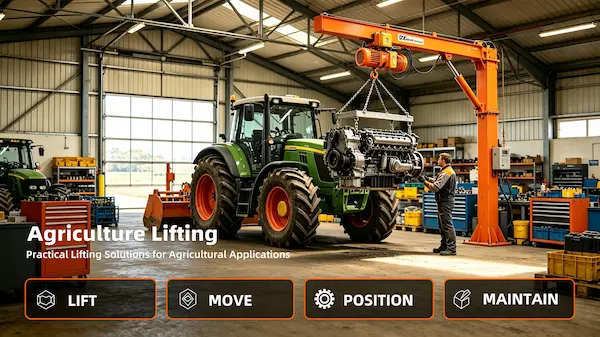
Agricultural operations rely heavily on machinery, mechanical processing, and continuous handling of heavy equipment components. From routine tractor maintenance to installing overhead grain handling assemblies, modern agricultural efficiency depends on proper material handling systems. Selecting appropriate agricultural lifting equipment helps prevent workplace injuries, lowers machinery maintenance downtime, and secures long-term operational flow.
1. What Is Agricultural Lifting?
In agricultural environments, “lifting” encompasses far more than simply suspending bulk sacks or crates. Agriculture lifting refers to the controlled vertical elevation, precise positioning, horizontal pulling, and secure handling of heavy loads across farm operations, repair shops, and storage facilities.
Common agricultural lifting tasks include:
- Machinery maintenance: Safely pulling or elevating heavy engine blocks, gearboxes, cutter bars, and axles[cite: 2, 6].
- Equipment installation: Mounting heavy-duty irrigation pumps, electric motors, overhead conveyors, and processing equipment[cite: 1, 2].
- Material handling: Moving bulk bags, spare parts, fertilizer containers, and machinery assemblies[cite: 1, 2].
- Parts handling & workshop operations: Supporting delicate mechanical positioning in limited garage or workshop spaces[cite: 2, 6].
2. Common Agricultural Lifting Applications
To understand which lifting gear fits best, it helps to break farm operations into distinct functional areas:
Agricultural Machinery Maintenance
Farming machinery—such as tractors, harvesters, seeders, and balers—requires periodic servicing. Technicians frequently need to lift or position heavy mechanical parts like:
- Engine components and transmission blocks[cite: 2, 6]
- Submersible or surface pumps[cite: 1, 2]
- Heavy electric motors and industrial gearboxes[cite: 1, 2]
Equipment Installation
Installing permanent or semi-permanent farm equipment requires controlled hoist movement to align bolt holes and fittings safely. Typical examples include fitting high-capacity grain augers, crop processing units, or overhead ventilation systems.
Workshop Material Handling
Farm repair workshops demand versatile, space-efficient lifting systems to support technicians. Portable equipment handles spare parts, heavy assemblies, and shop tools efficiently without cluttering floor spaces[cite: 2, 3, 6].
Farm Storage & Handling
Handling heavy materials in storage sheds, barns, or loading bays requires dependable gear for repetitive hoisting or dragging items into transport vehicles[cite: 1].
3. Agricultural Hoist Applications
Selecting the proper farm hoist depends on job frequency, available electrical power, and operating space.
Manual Chain Hoist
For remote farm sites or operations without access to direct electrical outlets, a manual chain block is an ideal choice. The HSZ Manual Chain Hoist delivers robust, portable lifting performance for low-frequency maintenance[cite: 4, 6, 10]. For demanding tasks requiring greater durability and smoother chain movement, the HSC Manual Chain Hoist offers excellent reliability[cite: 4, 6, 10].
Lever Hoist
Lever hoists (ratchet pullers) excel in compact, confined spaces where operators need dual-function versatility. They allow technicians to perform vertical lifting, horizontal pulling, and precise component alignment during machinery overhaul.
Electric Chain Hoist
In equipped farm workshops and processing facilities where lifting is frequent, powered hoisting eliminates operator fatigue and speeds up turnaround times[cite: 3, 7]. The Fixed Electric Chain Hoist provides consistent vertical lifting power[cite: 4, 6, 10], while the Motorized Trolley Electric Hoist allows smooth horizontal travel along overhead beams[cite: 4, 6, 10]. If your farm workshop has limited vertical clearance, consider a Low Headroom Electric Hoist to maximize usable lifting height[cite: 4, 6, 10].
4. Agricultural Winch Applications
Winches serve an essential role in farm operations, particularly for horizontal movement, pulling disabled farm machinery onto trailers, or positioning heavy equipment across ground levels[cite: 1, 7].
An electric winch utilizes a wire rope wrapped around a drum to execute long-distance hauling and dragging tasks[cite: 1, 7].
5. Challenges of Agricultural Lifting
Agricultural working conditions present distinct operational challenges compared to standard indoor industrial warehouses[cite: 5, 8]. Key environmental factors include:
- Dust and airborne debris: Fine particles from grain, soil, and feed can enter internal mechanical components.
- Moisture, rain, and mud: Outdoor operations expose equipment to corrosion and water ingress[cite: 8, 12].
- Temperature extremes: Exposure to direct sunlight, hot summers, or freezing winter conditions[cite: 5, 12].
- Unstable or restricted spaces: Working outdoors on uneven ground or in tight, low-ceiling barns[cite: 2, 5, 6].
Agricultural lifting equipment should always be selected according to the actual working environment, including dust levels, moisture, temperature, and indoor/outdoor exposure conditions[cite: 5, 12].
6. How to Choose Agricultural Lifting Equipment
To ensure safe and economical equipment selection, consider the following key factors before purchasing[cite: 7, 9]:
- Load Weight: Determine the maximum actual weight to be moved[cite: 9, 11].
- Lifting Height / Reach Distance: Measure the exact vertical distance or rope payout length required[cite: 3, 7, 9].
- Frequency of Use (Duty Cycle): Is the tool used once a week for repairs, or continuously every day during harvest season[cite: 7, 8, 9]?
- Power Supply: Verify site electricity (e.g., Single-Phase 220V, Three-Phase 380V/440V, or manual power)[cite: 7, 9, 12]. Specific voltage must always be verified against equipment specifications.
- Installation / Mounting: Determine if the gear will mount to an I-beam, gantry frame, workshop ceiling truss, or fixed ground anchor[cite: 9, 12].
- Operating Environment: Match IP protection levels and housing durability against moisture and dust exposure[cite: 5, 8, 9, 12].
7. Choosing the Right Capacity
When evaluating load limits, remember: Rated capacity is a safety limit, not an operational target[cite: 5, 9].
Overloading lifting machinery poses serious risks of brake failure, chain binding, or structural damage[cite: 5, 11]. Rather than simply buying the largest available unit, follow a structured engineering selection path[cite: 9]:
Actual Load Weight + Rigging Accessories → Working Environment & Conditions → Required Rated Capacity → Suitable Model Matching[cite: 9]
Always include the weight of slings, shackles, spreader bars, and hooks when calculating your total working load[cite: 9]. To learn more about standard tonnage selections and system limits, read our comprehensive guide on how to choose hoist capacity[cite: 9, 11].
8. Agricultural Hoist vs Winch: Key Differences
Understanding the operational boundary between hoists and winches prevents equipment misuse and maintains jobsite compliance[cite: 5, 7].
| Parameter | Agricultural Hoist | Agricultural Winch |
|---|---|---|
| Primary Function | Vertical Lifting & Lowering[cite: 7, 12] | Horizontal Pulling, Hauling & Positioning[cite: 1, 7, 12] |
| Holding Mechanism | Mechanical load brakes designed to hold suspended loads vertically[cite: 5] | Braking mechanisms designed for dynamic pulling loads[cite: 7] |
| Medium | Load Chain or Wire Rope[cite: 5, 7, 12] | Flexible Wire Rope[cite: 7, 12] |
| Typical Farm Task | Lifting engines, pumps, overhead installations[cite: 2, 6] | Dragging equipment, hauling trailers, positioning loads[cite: 1, 7] |
9. Lifting Equipment During Farm Machinery Maintenance
Tractor and heavy equipment maintenance is one of the most demanding tasks on a farm[cite: 2]. Replacing or repairing internal components requires steady overhead suspension[cite: 2]:
- Engine Components: Lifting heavy cylinder heads or complete engine blocks out of tractor frames[cite: 2, 6].
- Hydraulic Pumps & Motors: Holding heavy hydraulic assemblies in position while line bolts are fastened[cite: 2, 6].
- Transmissions & Gearboxes: Precision elevation to align delicate shafts without damaging splines or casings[cite: 2, 6].
Using an overhead hoist with micro-inch control or a precision manual chain block minimizes physical strain and protects costly mechanical parts during reassembly[cite: 2, 3, 6]. For broader engine maintenance protocols, see our specialized guide on engine lifting and workshop hoists[cite: 2, 3].
10. Agricultural Lifting Safety Practices
Adhering to basic overhead safety rules reduces workplace hazards and extends equipment service life[cite: 5, 7]:
- Know the total weight: Never estimate loads loosely; check equipment specs or nameplates[cite: 9].
- Never exceed rated capacity: Do not overload the hoist beyond its certified SWL[cite: 5, 9, 11].
- Inspect before every shift: Examine load chains, wire ropes, latches, and hooks for wear, cracks, or twisting[cite: 5, 7, 12].
- Avoid side pulling: Ensure the lifting chain or wire rope remains strictly vertical above the load center to avoid housing strain[cite: 5, 7].
- Verify support structures: Ensure gantry beams or mounting points can handle the full working load[cite: 9, 12].
- Use rated rigging: Use certified slings, shackles, and lifting clamps[cite: 9].
- Clear the area: Never allow personnel to stand or work under suspended loads[cite: 5].
Review our in-depth safety breakdown on common lifting mistakes and safety practices to keep your site compliant[cite: 5, 7].
11. Kylift Agricultural Lifting Solutions
KYLIFT provides a versatile selection of material handling tools suited for agricultural repair shops, machinery maintenance, and storage facilities[cite: 1, 5, 7, 8]. Equipment is chosen based on your exact capacity, duty cycle, and environment[cite: 4, 8, 9].
- Manual Chain Hoists: Compact, portable manual chain blocks for off-grid maintenance[cite: 1, 4, 6].
- Lever Hoists: Durable pullers for pulling, positioning, and tight-space repairs[cite: 1].
- Electric Chain Hoists: Heavy-duty motorized hoists for high-frequency workshop lifting[cite: 1, 4, 6].
- Electric Winches: High-performance winches for horizontal dragging and equipment movement[cite: 1, 7].
Specific model suitability is confirmed against actual operating parameters and technical datasheets.
12. Need Agricultural Lifting Equipment?
Finding the right lifting or pulling setup depends on your exact operational requirements[cite: 4, 7, 9]. To help our engineering team identify the most suitable equipment for your facility, please share your project details[cite: 7, 11]:
- Load Weight: (e.g., 500 kg, 1 Ton, 3 Tons)[cite: 9]
- Lifting Height / Pulling Distance: (e.g., 3 meters, 10 meters)[cite: 7, 9]
- Application: (e.g., Tractor maintenance, pump installation, hauling)[cite: 2, 7, 12]
- Working Frequency: (e.g., Occasional repairs vs. continuous daily use)[cite: 7, 8, 9]
- Power Supply: (e.g., Manual, 220V 1-Phase, 380V 3-Phase)[cite: 7, 9, 12]
- Installation Method: (e.g., I-beam trolley, fixed hook, gantry)[cite: 9, 12]
- Working Environment: (e.g., Indoor shop, dusty barn, outdoor rain exposure)[cite: 5, 8, 9, 12]
- Destination / Port: (For accurate shipping quotes)
Tell Us About Your Application — We’ll Help You Identify the Right Equipment.