
Electric Winch Safety Tips You Should Know
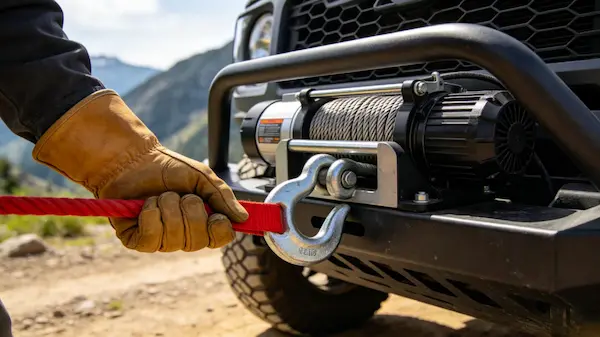
Whether you are pulling a stuck vehicle out of a muddy trail, clearing heavy fallen trees, or loading cargo onto a trailer, an electric winch is an incredibly powerful tool. However, with that immense pulling capacity comes significant physical risk. If handled incorrectly, the extreme tension in a winch cable can cause catastrophic equipment failure or severe personal injury.
As mechanical recovery specialists with over a decade of field experience, we have witnessed how even a minor oversight can lead to winch failures. We have compiled these four non-negotiable safety rules based on real-world recovery scenarios and rigid OSHA rigging guidelines.
Before executing your next recovery operation, make sure you understand and practice these fundamental electric winch safety procedures.
1. Inspect Cable and Rope Integrity Before Every Use
Your winch cable is the sole lifeline under tension during a recovery. Whether you utilize a heavy-duty wire rope electric winch or a synthetic line, structural integrity is paramount. Never assume a cable is safe just because it worked fine during its last operation.
Prior to powering up, perform a visual and physical inspection of the entire spooled length:
- Steel Cable: Check for kinks, bird-caging (separation of strands), rust, or broken wire strands. Any steel cable showing significant wear should be replaced immediately.
- Synthetic Rope: Look for signs of severe abrasion, cuts, chemical exposure, or heat fusing (shiny, hard patches on the rope).
Always wear heavy-duty leather gloves when handling steel cables to avoid painful metal splinters, and never let the cable slide freely through your bare hands.
2. Avoid Overload and Understand Winch Ratings
Exceeding the rated line pull of your winch is a direct invitation to motor burnout, gear failure, or snapping cables. This safety rule applies to all sizes, from heavy recovery units down to a lightweight mini electric winch or a highly adaptable portable electric winch used for utility tasks.
A winch’s rated capacity (e.g., 9,500 lbs) is calculated for the first layer of rope wrapped around the drum. With each subsequent layer of cable wound onto the drum, the pulling power decreases by roughly 10% to 15% due to the increased radius.
| Cable Layer on Drum | Approx. Pulling Capacity (% of Rated Capacity) | Recommended Safety Buffer |
|---|---|---|
| Layer 1 (Closest to Drum) | 100% | Always leave at least 5 wraps on drum |
| Layer 2 | 88% | Never overload beyond calculated limit |
| Layer 3 | 77% | Utilize a snatch block if more power is needed |
| Layer 4 | 70% | Double-check your rig’s total gross weight |
To safely manage loads and reduce wear on your system, always use rigged mechanical advantages like a snatch block when approaching high limits. This doubles your pulling capacity while keeping the strain on your motor and electrical components at a safe minimum.
3. Ensure Proper Mounting and Secure Anchoring
An electric winch is only as strong as its weakest mounting bolt. A powerful motor bolted to a flimsy bumper can rip itself free under load, turning the entire winch body into a high-speed projectile.
Always utilize a rated, vehicle-specific winch mount or a heavy-duty steel bumper designed to handle the exact rated capacity of your winch. For industrial lifting or structural rigging, mounting a professional construction electric winch or an heavy-duty electric lifting winch requires engineered steel frames and reinforced structural beams to prevent failure under load.
When anchoring, ensure your pulling angle is as straight as possible. Off-angle pulls cause the cable to bunch up on one side of the drum, damaging the winch housing, crushing the cable, and unevenly loading your mounting plates.
4. Establish a Clear Emergency Stop Protocol
If something goes wrong during a winch pull, every fraction of a second counts. You must be prepared to cut power instantly.
For workshop and stationary environments utilizing a high-performance 220v electric winch or an industrial-grade 380v electric winch, having an easily accessible, dedicated emergency stop circuit is a fundamental wiring standard. For 12V vehicle-mounted setups, we highly recommend installing a high-amperage manual battery disconnect switch inline on the positive power cable near the battery. This allows you to completely isolate the winch electrically if the contactor solenoid gets stuck in the “closed” position—a common failure mode where the winch continues to pull even after you release the remote button.
Frequently Asked Questions on Winch Safety
How far back should bystanders stand during a winching operation?
Bystanders should maintain a safety clearance zone of at least 1.5 times the length of the fully deployed cable. In the event of a cable snap, this prevents the recoiling cable from reaching observers.
What is a winch damper and is it necessary?
Yes, a winch line damper (or even a heavy jacket/blanket draped over the middle of the cable) is absolutely essential. It absorbs the kinetic energy of a snapped cable, forcing it to fall safely to the ground instead of whipping dangerously through the air.
How many wraps of cable must remain on the drum?
Always maintain a minimum of 5 tight wraps of steel cable, or 8 wraps of synthetic rope, on the drum. The friction of these wraps is what keeps the line secured to the drum; the small anchor screw is not designed to hold a load on its own.